
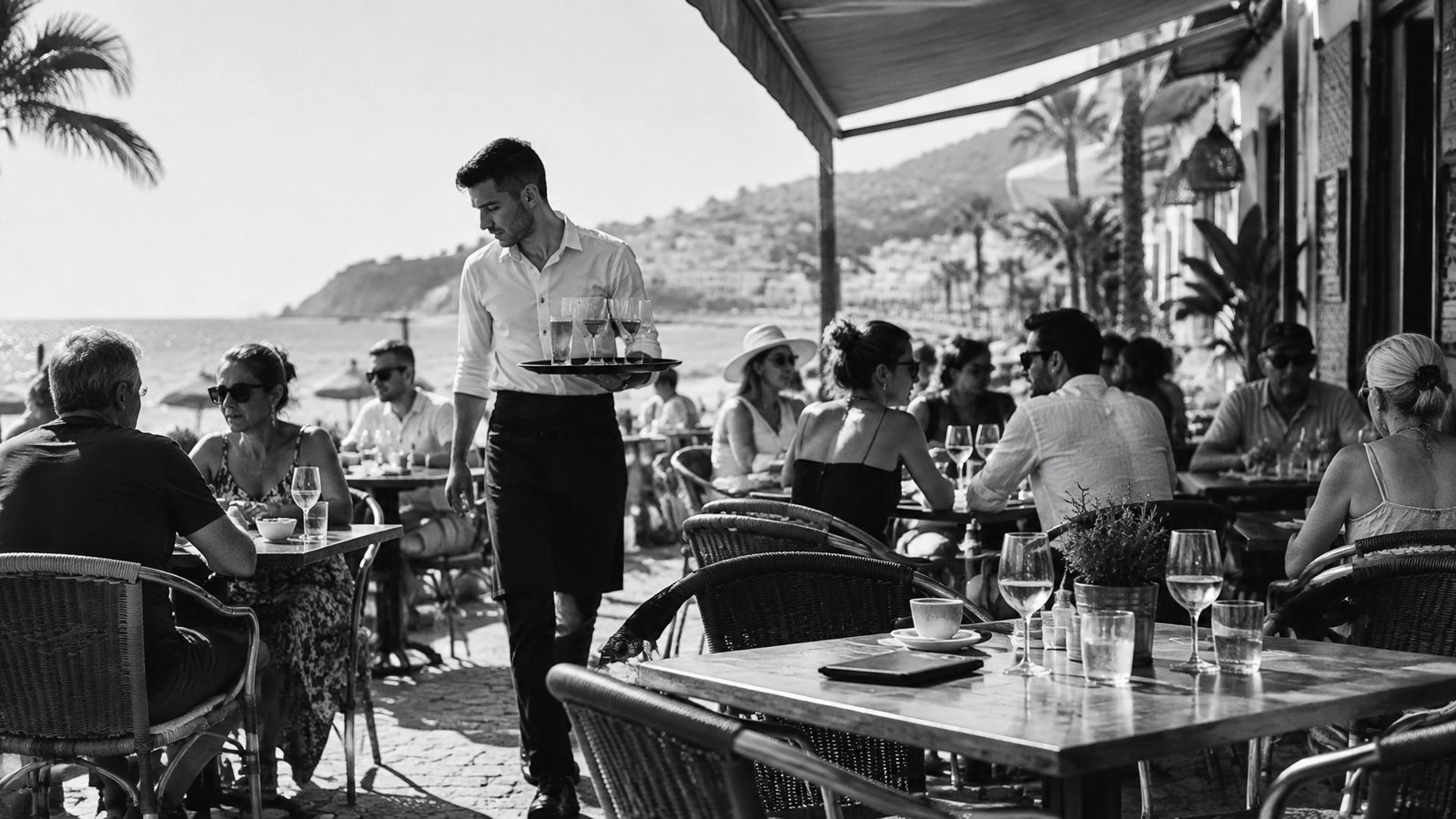
The Costa del Sol is full. So why are the tills quieter?
Benjamin Sawyer · 11 September 2026 · 5 min read
Updated 30 October 2026
The Costa del Sol has never been fuller: hotels were more than 90% occupied in August 2026, and the season now runs well into October. But many bars and restaurants are not taking more money. Guests are sharing dishes, skipping the second drink and the dessert, and comparing menus before they sit down. Occupancy tells you people are here. It does not tell you what they are spending, or whether you are making money. Read your own numbers, make the value of your menu obvious, and staff the months you actually have.
Two true stories
The figures are strong. Málaga's hotels were 92.85% occupied in August 2026, according to the hoteliers' association, Aehcos, with September expected close to 90% and more than three million overnight stays. Hospitality employment in the province reached a record of more than 120,000 people in August, according to the Málaga hospitality association, MAHOS.
At the same time, when Hostelería de España surveyed owners after the summer, almost half said they had taken less than the year before, with guests spending less per visit. Prices have risen; takings have not always followed. Both stories are true. The coast is fuller than ever, and the money each guest leaves is under pressure.
A full room can hide a weak month
Food, labour, energy, rent, and card fees all take their share before the owner sees a euro. A full terrace can sit alongside a poor result.
What has changed is how guests spend. They share two dishes instead of ordering one each, choose half portions or cheaper staples, stop at one drink, skip dessert, and take leftovers home. That is not a collapse in demand. It is a change in behaviour, and it calls for a different response.
Your till knows more than the newspaper
The mix of visitors is shifting, too. For autumn 2026, German visitors were expected to overtake British ones in parts of the market, such as rural tourism. A German couple on a quiet autumn break spends differently from a British family in July, and a Spanish family on holiday differently again. But these are broad tendencies, not rules.
Look at your own business: spend per guest, drinks per guest, how often coffee and dessert are added, how long tables stay, and which days and services pay. "The Germans spend more" or "the British are cutting back" is how an owner ends up managing a story rather than a business.
Make the value obvious
When guests are cautious, the reflex is to discount. That fills seats, but it teaches people to wait for an offer, and it costs the margin you need. Start by making sure the menu shows its value clearly.
- Make the safe choice a good one. A worried guest picks the dish that feels dependable. Make sure that dish is generous, consistent, and earns well.
- Know what each dish leaves. Judge dishes by the cash they leave after their cost, not by their price. A €20 dish with expensive ingredients can leave less than a simpler €14 one. And work it out before IVA: at 10%, a €12 sale is €10.91 that is actually yours.
- Give drinks a clear choice. Guests cutting back on food often still want something cold. A good house wine by the glass, a local beer, a proper alcohol-free drink, and coffee treated as part of the meal. "Would you like a drink?" is functional; "something cold and light, or a glass of the house white?" starts a conversation.
September and October are part of the season now
The sharp drop after August is flattening. September brings couples, smaller groups, older visitors, and short breaks: guests who want comfort rather than noise, with the busiest service moving towards lunch and the early evening. October is still strong.
That is not a longer August. It is a different pattern, and many venues still staff and buy as though it were August. Look at your opening hours day by day, your staffing for each service, whether you need late cover in October, whether suppliers can deliver smaller amounts more often, and whether your menu is too big for a quieter, more discerning room.
Read the room you actually have
A busy coast is a good place to run a bar or restaurant. But busy is not the same as profitable, and the owners who do well over the next few years will be the ones who read their own numbers, not the headlines.
If your terrace is full and your bank account is not, a Hospitality Health Check will show you where the money is going.