
How much money do you need to open a bar or restaurant in Spain?
Benjamin Sawyer · 30 October 2026 · 5 min read
More than the traspaso and the fit-out. To open a bar, restaurant, or café in Spain, budget for the traspaso if there is one, the fit-out, the equipment, the fianza, the licence project and the town hall's fees, the opening stock, and the team's training. Then add a contingency for the build, enough to live on while the paperwork goes through, and working capital to trade for at least six months at a realistic level of sales, longer if you open into the winter.
The bulletproof notebook
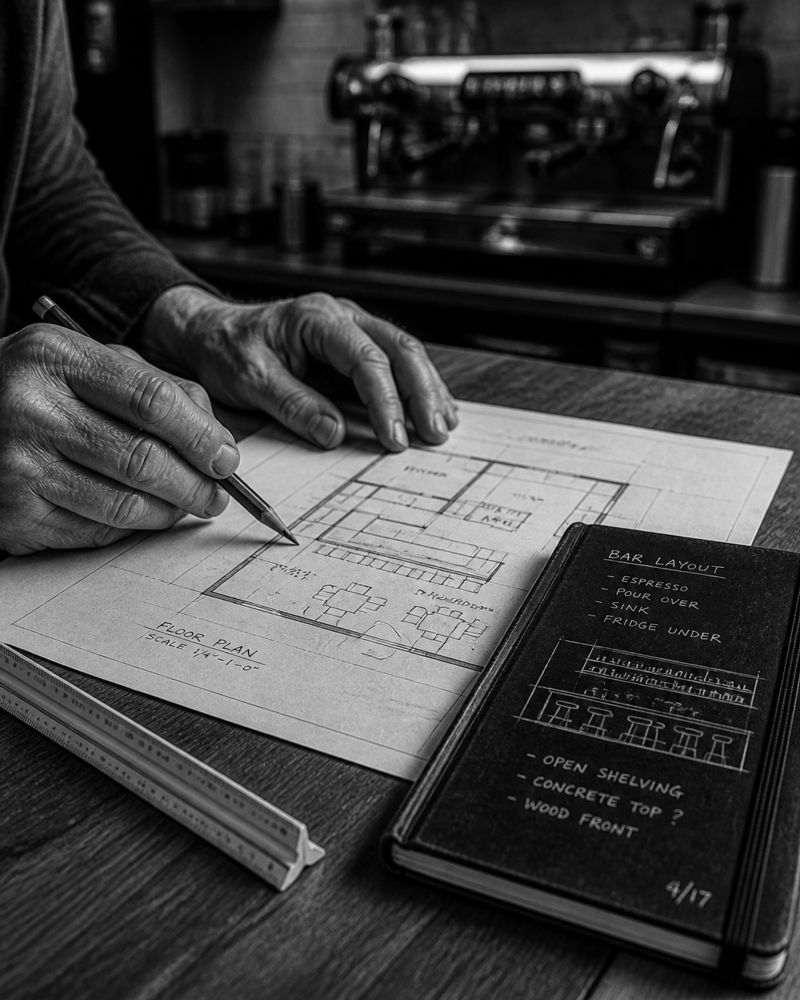
I once sat in a quiet corner of a café in Málaga with someone about to open their first restaurant. They had a leather notebook full of what they called a bulletproof plan: the concept, the menu, the site, even a supplier's factura to prove the food costs were right. Then I asked how much cash would be in the bank six months after opening, and the confidence turned to confusion.
They had costed the opening perfectly. They had forgotten that a restaurant is not an event. It needs feeding for months before it starts to feed you. I call it the capital trap: the quiet assumption that once the doors open, the business will pay for itself.
Opening day is not the finish line
Many first-time owners pool their savings, borrow what they can, and spend every last euro on the traspaso, the fit-out, the coffee machine, and the first order of stock. They open with a beautiful room and an empty bank account.
In my experience, more new venues fail for want of working capital than for want of talent. Opening is the start of the most expensive phase, not the end of it. What you are really buying with your reserve is time: time for your reputation to catch up with your rent.
The costs people forget
The oven is easy to remember. The smaller, duller costs do the damage:
- The fianza and guarantees. For business premises, the legal deposit is two months' rent, and many landlords ask for an extra guarantee on top.
- The paperwork. The architect or engineer's licence project, the town hall's fees, the gestor, and the abogado. They add up quickly.
- The wait. Depending on the town and the venue, the licences can take three months to a year. You pay rent, and live, while you wait.
- The building. In an older property, touch one pipe and you may find yourself paying to bring the whole system up to standard.
- Wages before revenue. Your team needs training before you open, which means wages and Seguridad Social for days or weeks with nothing coming in.
- Your own contribution. As an autónomo, you pay your monthly Seguridad Social contribution from the day you register. New autónomos can usually pay a reduced rate in their first year; ask your gestor what applies to you.
None of these is an emergency. They are certainties. I add a contingency of 15% for exactly these, and I would not open without it.
Work out your runway
Once you are open, there is usually a period when the costs, rent, wages, energy, and stock, are higher than the takings. How long you can survive it is your runway.
Divide the cash you have in reserve by what you expect to lose each month. If you are losing €5,000 a month and hold €15,000 in reserve, you have three months to reach break-even. Three months is rarely enough. Aim for at least six months of trading costs held back, and more if you open in the autumn and face the winter first.
Pay yourself
The most common omission from a start-up budget is the owner. "I won't take a salary for the first year" sounds responsible. It is usually a route to burnout. You still have rent to pay and a family to support. If the business cannot pay you a basic wage from its reserves, it is underfunded, and an owner worried about their own rent cannot lead a team or charm a room.
A plan that survives a bad year
- Price from real quotes, not from what the place next door spent, and add the contingency.
- Model three first years: the dream, the realistic, and the bad one, season by season. Make sure you have the cash to survive the bad one for at least six months.
- Keep the reserve separate. It is not for better chairs. It is money that lets you sleep, used only when trading falls short.
- Get the right advice early: a gestor who knows hospitality, an abogado for the lease and the traspaso, and someone who will test the plan as an operator.
If your money will not cover the opening, the wait, and six months of trading, do not rush to open. It is far better to delay and raise the rest than to open a beautiful room with enough cash to last until Tuesday.
If you would like your numbers tested before you sign anything, Plan builds the budget with you, from the first idea to opening night.