
Archaeology vs control: why a monthly stock count is too late
Benjamin Sawyer · 16 July 2026 · 6 min read
Updated 30 October 2026
A monthly stock count tells you that money has gone. It cannot tell you when it went, how, or on whose shift, and by the time you see it, a month of margin has already left the building. That is archaeology. Control is a daily line check on the ten items most likely to go missing, compared every night with what the till says you sold.
What the monthly count cannot tell you
Picture the office at the end of the month. The menu should be making 72% gross profit; the stocktake says 67%. Those five points are the difference between a business that is doing well and one that is treading water, and they disappeared weeks ago, through a hundred small leaks nobody saw.
The monthly count will show you the gap. It will not show you that a chef has been plating the sea bass 20 grams heavy every evening, or that the bar has stopped writing down the gin it spills. You are left trying to remember a busy Friday four weeks ago to explain a number that is now history.
I think of it as a ladder. A quarterly count is archaeology: by the time you uncover the problem, it is ancient history. A monthly count is keeping an eye on things, which is better, but you are still looking at a month-old wound. Weekly is where control begins. Daily checks on your problem lines are where you start to understand what is actually happening.
"Ben, necesitas control"
When I first opened in Spain, the old hands who had run chiringuitos and tapas bars for forty years all gave me the same advice, with the same solemn nod: "Ben, necesitas control." You need control.
They were surprised by my till-driven stock system; most of them had never used one. Their control was a ritual. They knew how many jamones were out the back and how many bottles of brandy were on the shelf because they looked every morning. In a business that lives on small margins, what you do not watch, you lose.
They were right. The software is better now, but control was never a software feature. It is a habit, and the software only helps you keep it.
Most leakage is drift, not theft
Theft happens, but it is rarely the main reason a margin slides. Most of the loss is drift: a slow departure from the standard that nobody notices, because nobody is looking.
- The senior chef who judges steak portions by eye because the board is full.
- The new bartender who does not know how to log a broken bottle.
- The prep cook who trims a beef fillet like a lumberjack rather than a surgeon.
- The recipe set up wrongly in the till, so every portion sold creates a false variance.
- The delivery nobody checked against the invoice.
None of these is malice. Most are training gaps, and some are typing errors. Left alone, "close enough" becomes the standard. A daily check catches it while it is still a habit you can change.
How to run a daily line check
A line check is not a full stocktake. It is a short count of the items that cost the most, or go missing most easily. For most venues, ten items is enough:
- Proteins: steaks, fish, and any high-value meat.
- Dairy: premium cheese, butter, and cream.
- Produce: the expensive lines, such as avocados, berries, and speciality mushrooms.
- The bar: house spirits, wines by the glass, and draught beer.
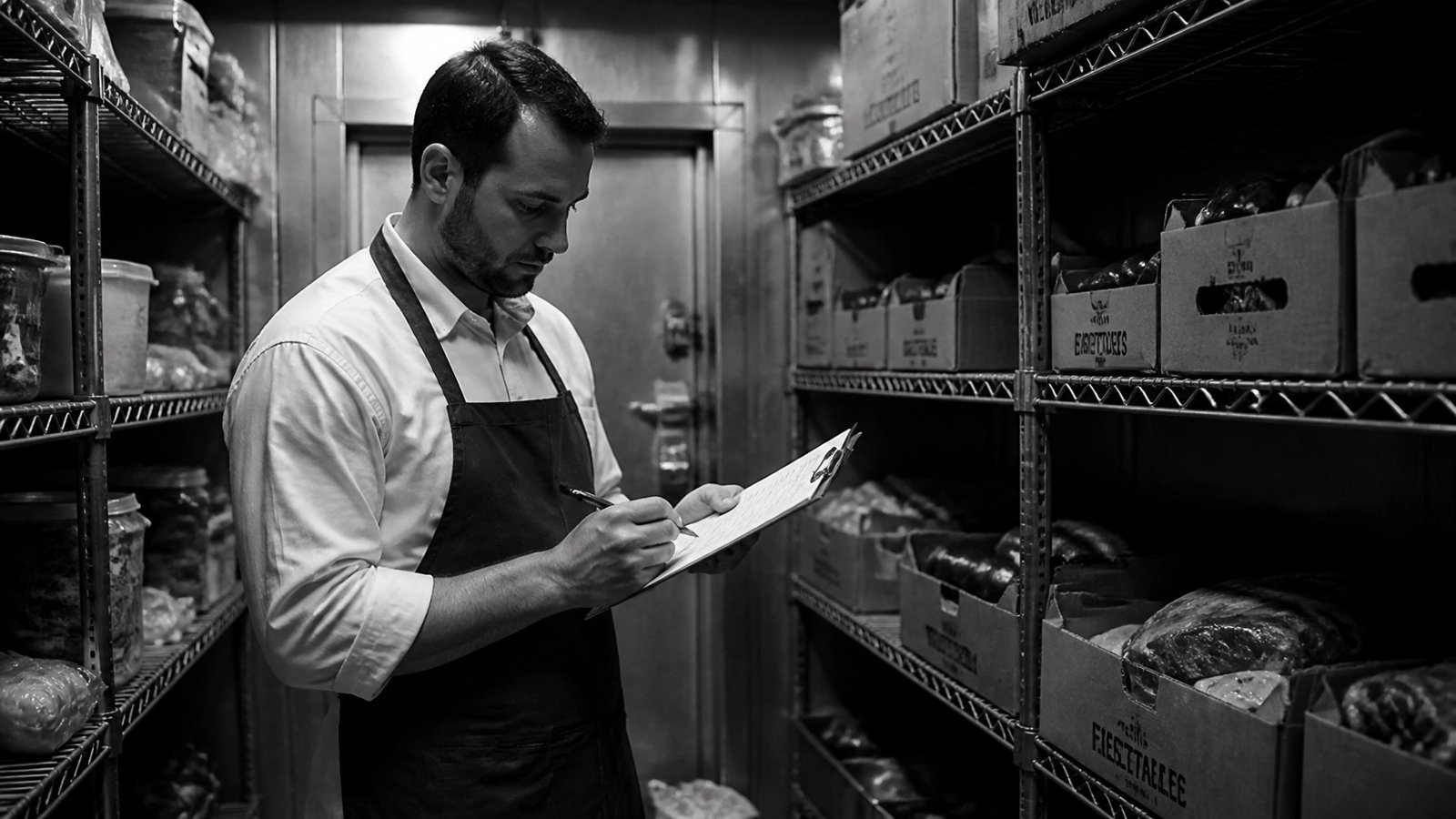
Count each item when you open, add what was delivered, and count again when you close. The difference is what you used. Compare it with what the till says you sold.
If the till says you sold 42 steaks and 45 have gone, you have a three-steak problem, and you have found it within a day. You can still talk to the team who worked that shift, check the waste log, and find out whether it was a portion, a missing order, or something else. That is the move from archaeology to management.
You do not need to count ten items tomorrow. Start with your most expensive one. A steakhouse counts its fillets; a seafood bar counts its lobsters. Once the team has the rhythm of one, the habit spreads.
Make it theirs, not yours
A line check that feels like a trap set by management will be resisted, worked around, and then quietly dropped. It sticks when the team understands it, owns it, and sees it noticed.
I have always used an old training rule: five bums on the rugby post. Who, what, why, where, when, and how. Who counts the steaks tonight? What exactly is counted? Why every day, not every week? Where is the variance written down? When does the count happen? How do we deal with it when the numbers do not match? Leave one unanswered, and the system has a hole in it.
Then three things keep it alive:
- Purpose. If the chef knows that weighing the salmon is what pays for the overtime, the Christmas bonus, or the new grill, it stops being busywork. People protect what they understand. They ignore what is imposed on them.
- Ownership. Teach the principle, agree the target, and let the team choose the method. Whether the sous chef counts in the afternoon lull or first thing, and whether the bar logs it in a notebook or a spreadsheet, matters less than that they do it.
- Recognition. If the only time anyone mentions stock is when something has gone wrong, the habit will die. When the variance is down for the third week running, say so at the briefing, and buy the team a drink after service. Flag it when portions run heavy, too: short-changing the guest is a failure of its own.
Start tonight
Pick your most expensive item, count it at close, and count it again tomorrow. In a week you will know more about where your margin goes than a year of monthly stocktakes has told you.
If the gap is larger than one item can explain, a Hospitality Health Check will find where the rest is going.