
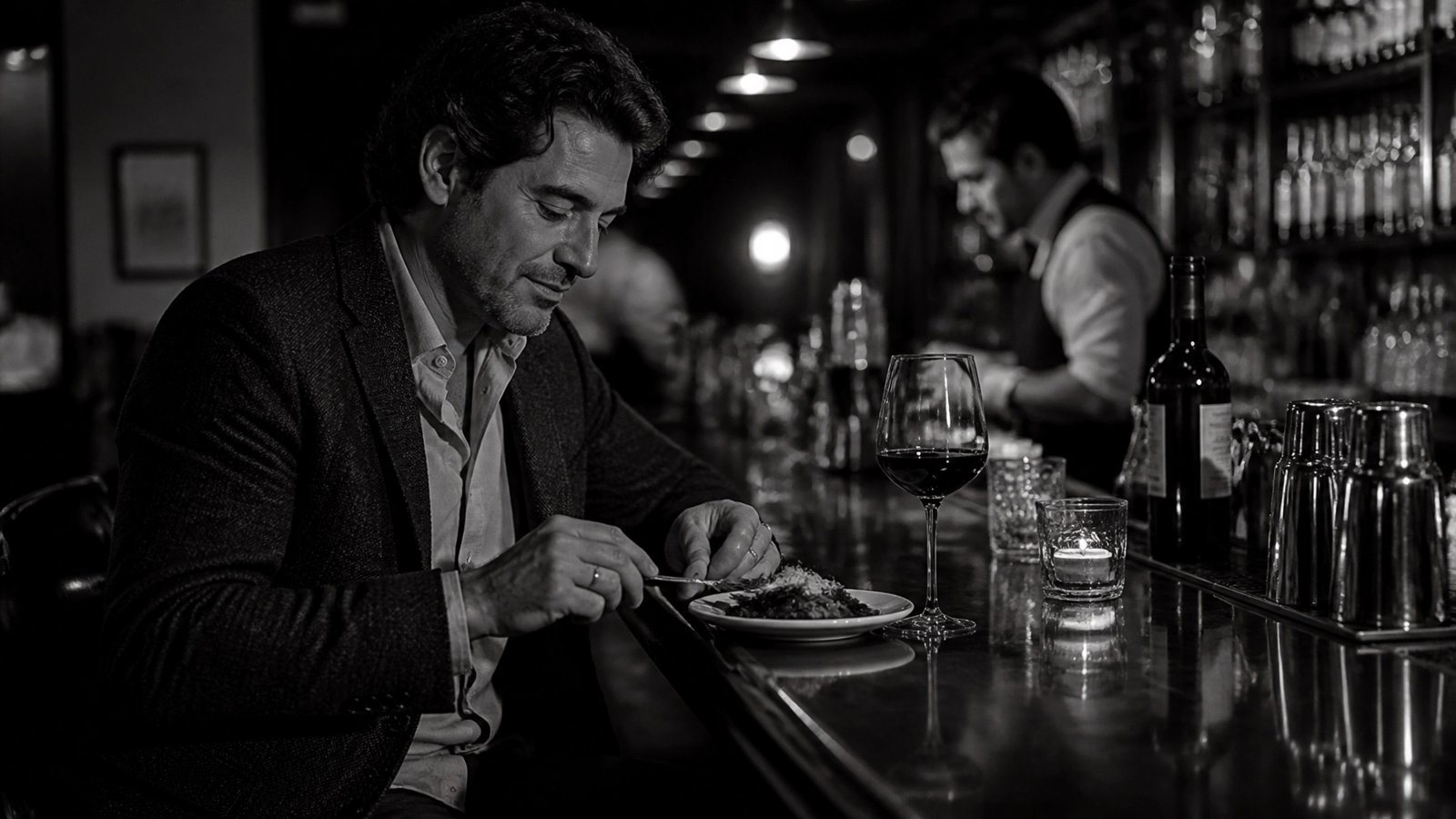
Table for one: why your most loyal regular may be sitting alone
Benjamin Sawyer · 8 June 2026 · 5 min read
Updated 30 October 2026
Solo diners are among the best guests a restaurant can have. They decide quickly, eat without lingering, often spend well, and, if they are treated well, come back every week. Yet many are still shown to the worst table in the room. Give a guest dining alone a choice of good seats, look after them at the bar, bring the bill when they want it, and greet them as you would a regular, because that is what they can become.
The single raised finger
There is a look many front-of-house staff give when a guest walks in and holds up one finger. A flicker of pity, then a quick calculation: where can I put this person so they do not take up a table for four?
I have watched that look thousands of times, and it is a misunderstanding of hospitality. The solo diner is treated as a placeholder between real bookings, to be tucked away near the toilets. Booking platforms report that tables for one are a growing part of their reservations. These are not lonely people looking for somewhere to hide. Many of them are your most efficient, most loyal guests.
Why a party of one pays
- They are quick. A table of four can spend twenty minutes choosing and forty over coffee. A solo diner usually knows what they want, eats, and frees the seat in about half the time.
- They often spend well. With nobody to split the starters or suggest the house wine, many order exactly what they came for: the steak, the good glass of red.
- They come back. A group of friends might visit twice a year. A solo diner who feels welcome can become a Tuesday-night fixture: the self-employed after a long day, the business traveller tired of room service, the neighbour who treats your bar as a second sitting room. That steady trade is what carries a venue through the quiet weeks.
The dark corner
The most common mistake is banishment: the wobbly table, the flickering light, the far end of the room where the guest becomes invisible to the team. It is usually meant to protect revenue, by keeping the good tables for a party of four who might walk in.
But it tells the guest, plainly, that they matter less than people who are not even there yet. A guest in a dark corner will not order a second drink, will not stay for dessert, and will not tell anyone about the lovely place they found. They will eat quickly and not come back.
Every guest deserves the same warmth, whatever they order and however many of them there are. Offer a choice instead of a default: "Would you like a seat at the bar, or a quiet table by the window?" The question alone changes the evening from a meal alone into an evening out.
Designing for one
You do not need to refit the room. You need to look at it differently.
- The bar. It is the solo diner's natural home: something to watch, somewhere to lean, and a direct line to the team. Make sure the stools are comfortable, with footrests and somewhere for a bag. A guest at the bar is a chance for your team to show what they know, without hovering.
- The bill. A guest on their own has nobody to talk to while they wait, so every minute feels like five. Train the team to bring the bill promptly when it is wanted. Equally, read the signs: someone with a book is telling you they would like to stay.
- The menu. If everything is a sharing plate, one person can only try two things. Half portions of a signature dish, or a small tasting of snacks, turn a quick dinner into a good one.
From guest to regular
Treating a solo diner well is the quickest way to win a regular, and regulars are the cheapest marketing there is. It starts at the door: "Table for one?" should sound exactly like "Welcome back." Remember their name and their drink. If they come in every Thursday, have their favourite seat ready.
We are easily distracted by the big night: the party, the full room. But the backbone of most good independent venues is the quiet regular who comes in on their own, pays without fuss, and speaks up for you when a stranger leaves a bad review.
The next time that single finger goes up, do not look for the dark corner. Look for the best seat in the house.
If you would like an honest look at how your room treats every guest, from the first greeting to the last, Run starts with the floor.