
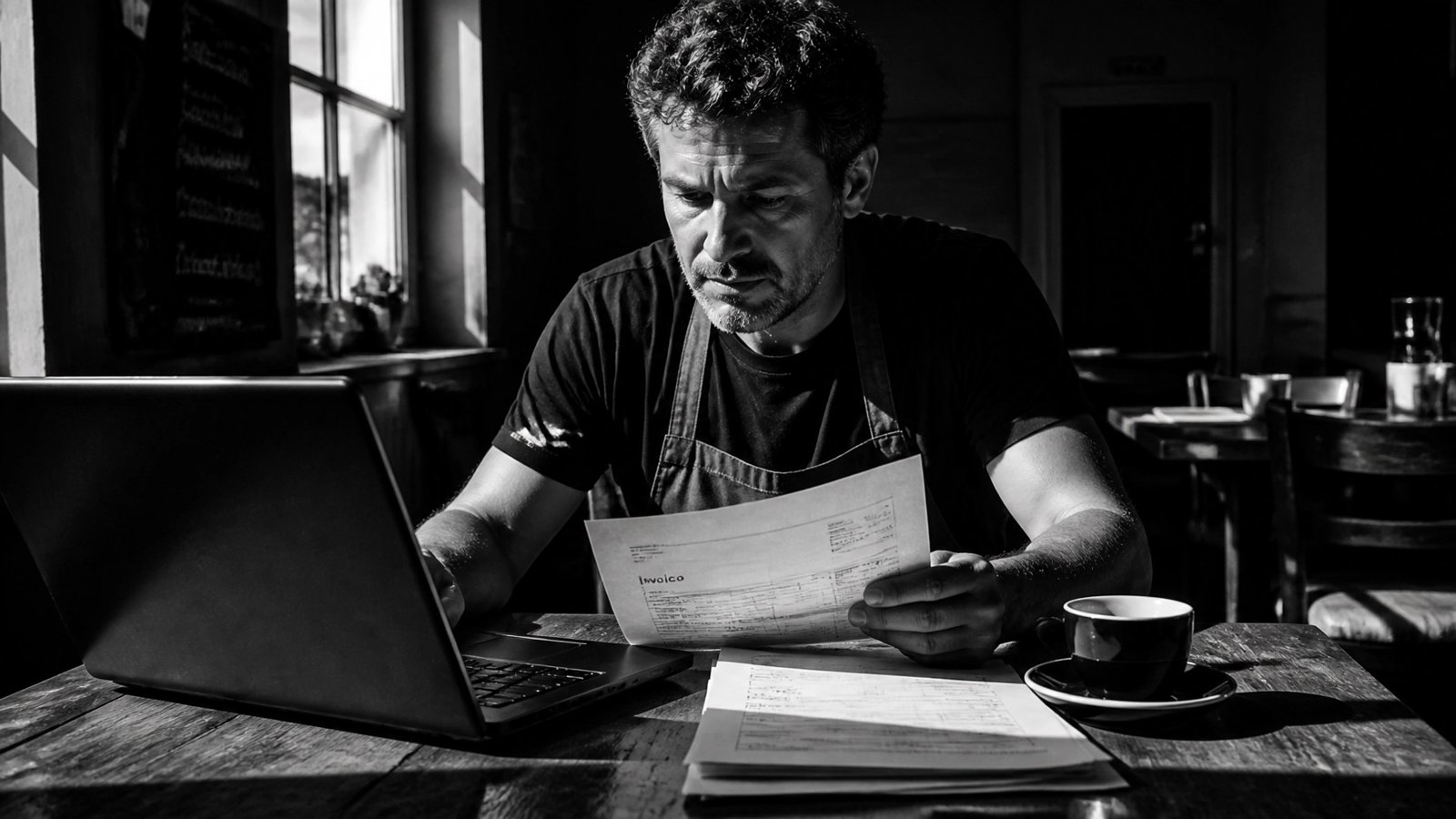
The accountant, the builder, and the bistro: why only one apologises for its margin
Benjamin Sawyer · 15 July 2026 · 5 min read
Updated 30 October 2026
Your plumber does not apologise for the call-out fee, and your accountant does not apologise for theirs. Yet independent restaurants, pubs, and cafés apologise for every price rise, as if profit were something to be ashamed of. It is not. Profit is what pays for the oven when it fails on a Friday, the training that keeps standards up, and the owner who put their house on the line. Price for it, explain your value, and stop apologising.
The call-out fee
Call a plumber out on a Saturday afternoon to fix a burst pipe, and the invoice arrives with a polite nod. The figure is what it is. Nobody apologises for the hourly rate or the mark-up on the copper. They have a skill, they have a van to keep on the road, and they expect to make a margin.
Your accountant is the same. Their fee does not come with a letter saying they feel rather guilty for charging you. They are professionals, and they know a business has to make money to last.
Somewhere along the way, hospitality developed the opposite habit. Put a flat white up by twenty pence, or a main course by a pound, and the owner does it with a heavy heart and an apologetic post on social media, all but asking guests to forgive them. The bistro is the only business on the high street that feels it has to justify its margin.
Last in the queue
There is a romantic idea that owning a restaurant is about the kitchen and the theatre of the dining room. The reality is that the owner is the last person in the building to be paid. Look at a normal week:
- The team, paid for every hour, whether the room is full or empty.
- The landlord, rain or shine.
- The suppliers: the butcher, the grocer, and the wine merchant.
- The energy company, which offers no discount for a quiet Tuesday.
- HMRC, collecting VAT and National Insurance with clinical efficiency.
Whatever is left belongs to the owner. In my experience, that is often a margin in low single figures, and a restaurant that makes 10% is very well run. Even then, the owner carries all the risk for a small part of the return.
The weight of 20%
In the UK, VAT on a restaurant meal is 20%. Sell a sea bass for £24, and £4 goes to HMRC before you have paid for the fish, the chef, or the gas to cook it. In France, Spain, and Italy, a restaurant meal is taxed at around 10%. That difference is not a technicality. It is money those businesses keep, and use to build resilience. The sector campaigned hard for a cut at the Autumn Budget; it did not come.
So the margin has to come from your prices, and from how carefully you run the place.
The overpriced menu
The same guest who pays £80 an hour for a mechanic without blinking will often object to £2 more on a steak. There is a gap between what people think food costs and what it costs to serve it.
A restaurant is not selling ingredients on a plate. It is selling the room, the skill of the kitchen, the clean linen, and the fact that someone else is doing the washing up. When you adjust your prices, you are not being greedy. You are keeping the lights on while every cost you have, from cooking oil to employer's National Insurance, keeps rising.
Profit is the price of staying open
Profit is not an optional extra. It is the emergency fund for the broken oven, the money for training and better equipment, and the reason you can one day step back from the pass. Without it, nothing gets reinvested. The paint peels, the service slows, and the menu goes stale. A restaurant with no margin is closing in slow motion.
That means treating your margin as the accountant and the builder treat theirs. Cost every dish properly. Price the top of the menu on the cash it leaves, not just the percentage. Waste nothing you can help. And when a price has to rise, explain the value rather than apologise for the number.
Hospitality is often the heart of a high street: the place between work and home where life actually happens. But a heart cannot beat on passion alone. Profit is not a dirty word; it is the price of permanence.
If you are not sure where your own margin is going, a Hospitality Health Check will show you, line by line.