
Cafe Startup 101: A Practical Guide to Your Opening Checklist
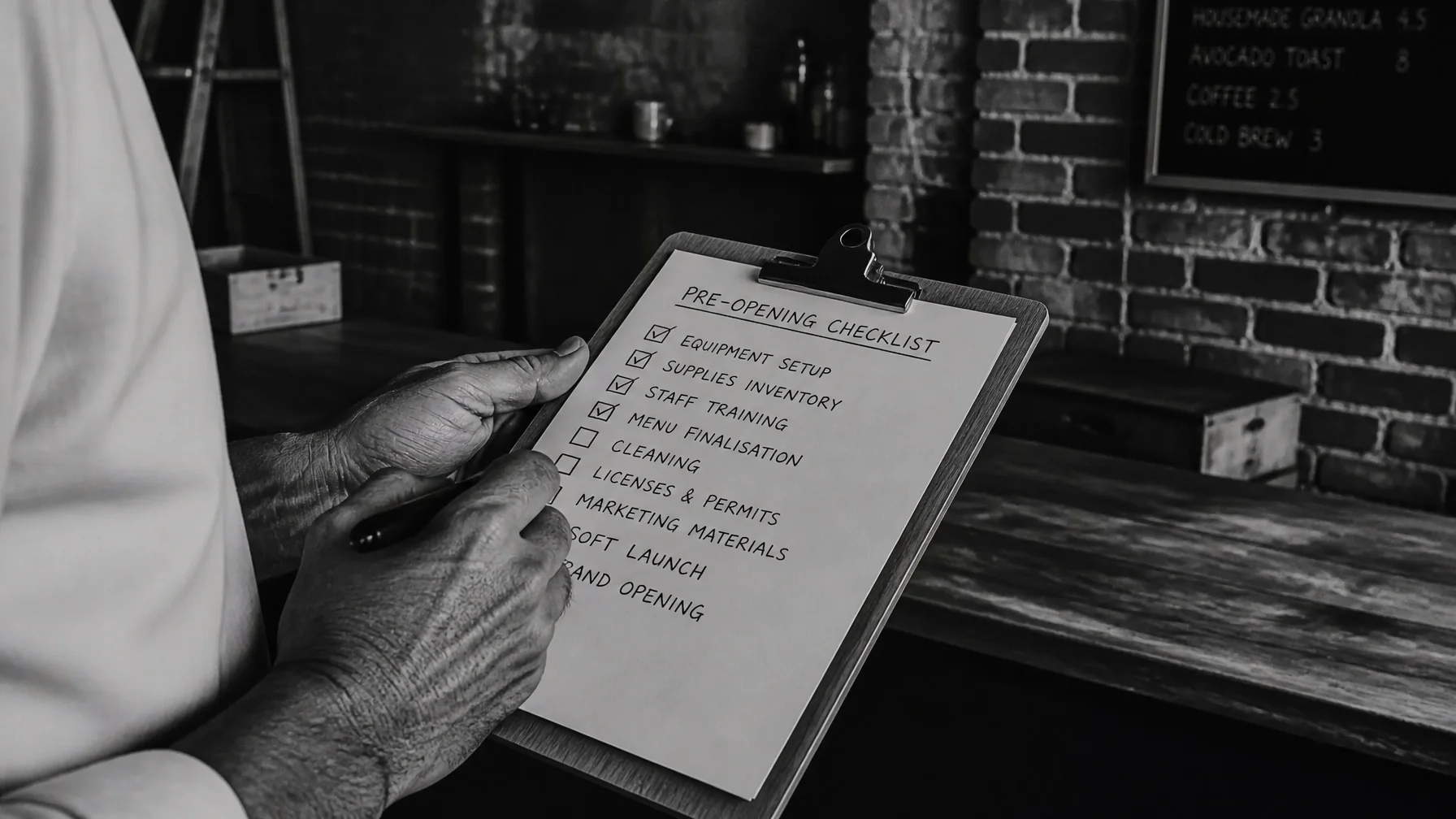
Most people who open a café do so because they love coffee, or they love the idea of people gathering in a space they have built. This is a noble sentiment; however, it is also a dangerous one. In thirty years of opening, running, and fixing hospitality venues, I have found that the most successful operators are those who realise, quite early on, that opening a venue is not a creative project; it is a capital decision.
The romantic image of the first morning: the steam from the espresso machine, the perfectly curated playlist, the first regular walking through the door: is the reward for the work, but it is not the work itself. The work is the sequence of fifty critical decisions you make before that door even opens. Most hospitality failures are not caused by a lack of passion; they are caused by a plan that contains a few quiet assumptions that only become visible once cash is leaving the account every day.
To help you navigate this, we have condensed these decisions into ten core pillars. This is the foundation of our Independent Operator's Pre-Opening Checklist, designed to move you from a state of hope to a state of clarity.
1. Concept and Positioning
Can you describe your venue in one sentence without using three "ands"? If the description is a long, winding paragraph about "fusion-organic-industrial-community-hubs", you have a clarity problem. A concept must be genuinely distinct in its local market. You are not building for yourself; you are building for a specific customer in a specific neighbourhood. Before you buy a single chair, define the story you are telling.
2. Legal and Business Setup
This is the least romantic part of the journey, but it is the one that can end it the fastest. Whether you are operating as an autónomo in Spain or a limited company in the UK, your structure must be sound. This includes registrations, health and safety licences, and the often-overlooked insurance policies. Do not skip professional legal advice on your lease. A bad lease is a weight that will eventually pull even the best concept under.

3. Premises and Lease
The site must be right for the concept, rather than the concept being bent to fit the site. Neighbourhood research is vital. It is easy to fall in love with a building because of its high ceilings or its charm; however, you must ask yourself if the foot traffic and the local demographic can actually support your price point. Consider the real cost of the premises: not just the rent, but the rates, the service charges, and the inevitable repairs.
4. Finance and Funding
Enthusiasm is not a business plan. You need a working financial model with every assumption written down. This includes your pre-opening costs, your working capital for the first ninety days, and a realistic cash buffer for when revenue falls below forecast. Remember to account for IVA or VAT in every calculation. Underestimating the runway is the most common reason new cafés fail within their first year.
5. Menu and Product
A menu is a commercial document. Its job is to generate revenue and support your margin; exciting the guests comes after that. Many first-time owners make the mistake of having too many dishes, which increases waste and complicates the kitchen flow. Every item must be costed accurately, with recipe documentation that ensures consistency. We recommend engineering your menu early, as it shapes your equipment needs and your staffing levels.

6. Suppliers and Procurement
Your suppliers are your most important partners. Building strong relationships early on can lead to better credit terms and more reliable deliveries. Always have backup suppliers for your core items. Whether it is your coffee roaster or your fresh produce supplier, ensure their ordering systems align with your operational flow. Compliance with allergen regulations starts here, at the point of procurement.
7. Team and Staffing
Hiring for attitude is a cliché because it is true. You can teach someone how to use your specific POS system, but you cannot teach them to care about a guest's morning experience. Your recruitment timeline should allow for at least two weeks of onboarding and training before the soft opening. A well-defined management structure ensures that everyone knows who is responsible for what, preventing the chaos that often plagues the first week of trade.
8. Operations and Systems
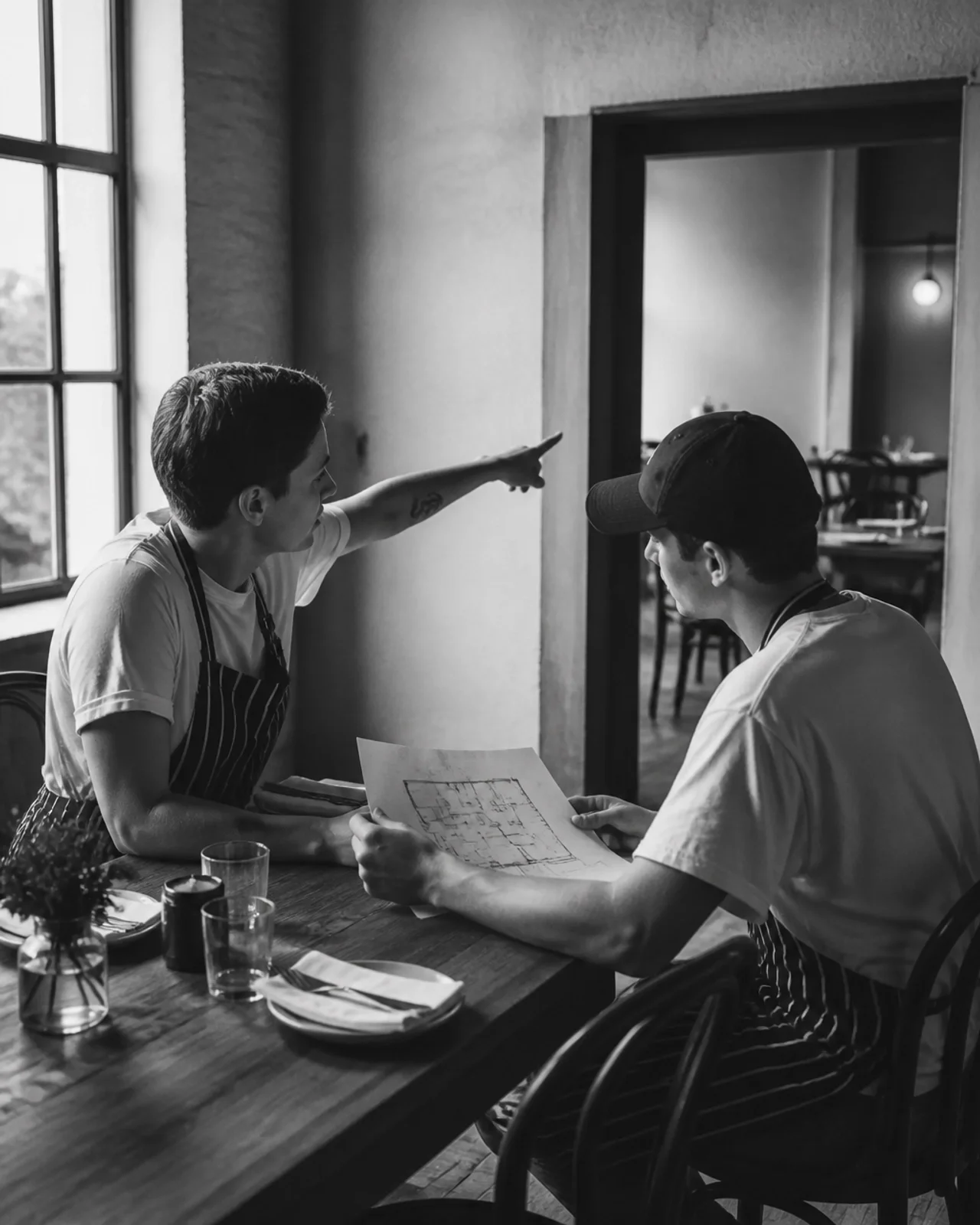
Opening and closing procedures, food safety management, and service standards must be written down. If they are only in your head, they will not happen when the café is full and you are busy. Consider the layout for flow; can a server get from the bar to the furthest table without weaving through a crowd? A "soft opening" is not a party for your friends; it is a dress rehearsal to find the friction points in your systems.
9. Technology and Infrastructure
Technology should solve problems, not create them. Your Point of Sale (POS) system, your reservation software, and your inventory management tools must talk to each other. Do not fall into the trap of buying every new app because a "tech-bro" told you it was essential. Focus on the basics: a reliable payment processor, a clean website, and an updated Google Business Profile.
10. Marketing and Pre-Launch
Marketing does not start on opening day; it starts months before. Building an email list and a social media presence during the fit-out phase creates a "warm" audience for your launch. Your strategy should include a plan for the quiet periods that inevitably follow the initial opening hype. Focus on generating genuine reviews early on to build social proof within your local community.
A Final Note on Evolution
Opening a café is a marathon of small, disciplined steps. You do not need a radical revolution on day one; you need a steady evolution toward excellence. By following a structured approach and using a comprehensive checklist, you remove the guesswork and replace it with a professional framework.
If you have already committed capital and want a second opinion on your plan, our Pre-Opening Diagnostic provides a calm, experienced view on what is at risk and what matters most in your final ninety days.
Success in hospitality is rarely about luck; it is about the quality of the decisions you make before the first guest arrives.