
The Pricing Trap: Why Copying the Competition is a Race to the Bottom
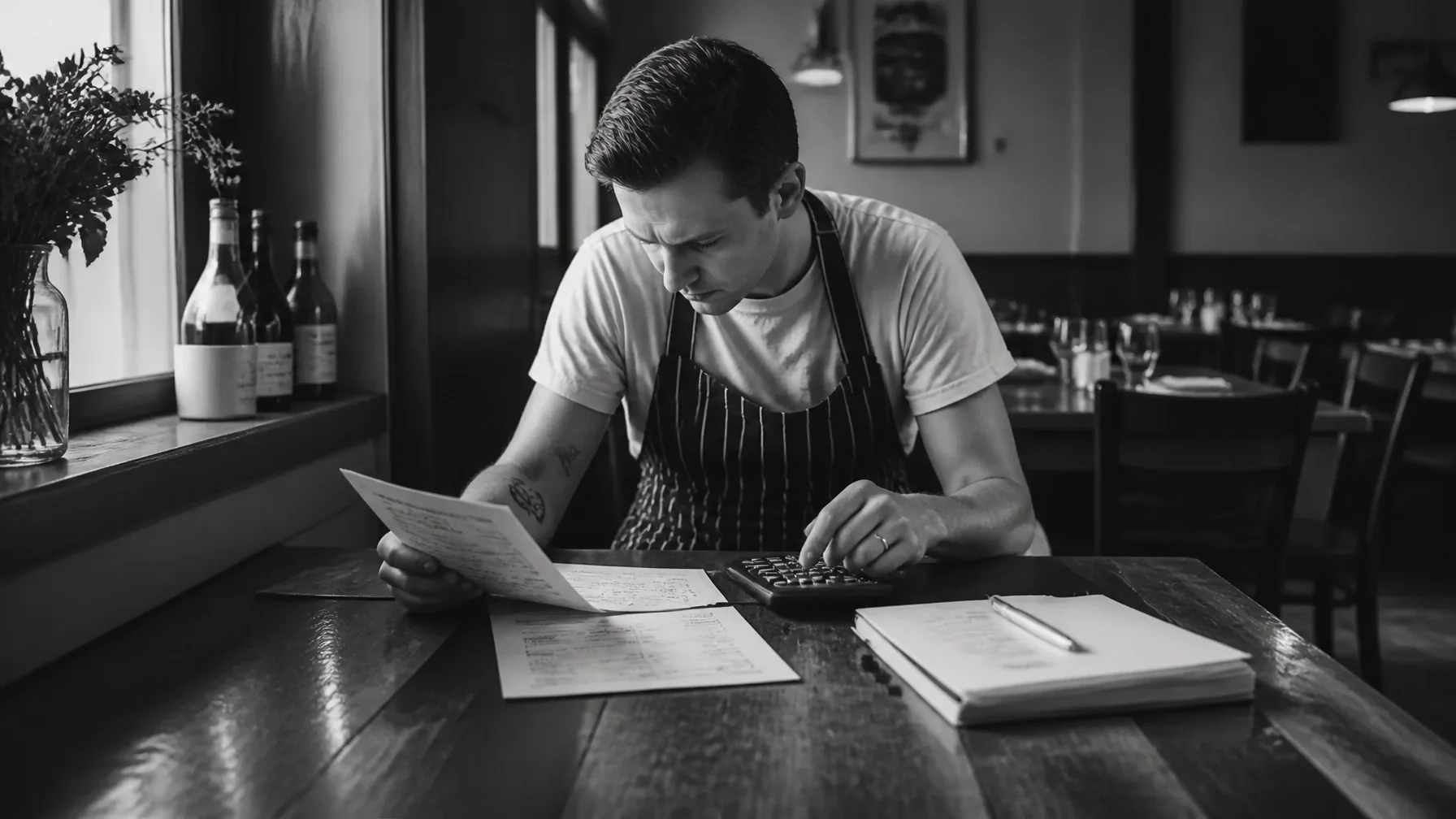
There is a quiet, recurring scene that plays out in independent hospitality businesses across the country with such frequency that it has become a modern industry ritual. A new corporate chain opens its doors around the corner, or perhaps the local Wetherspoons announces a seasonal price cut on its already modest menu. Within days, the owner of the independent pub, bar, or café down the road is sitting at their kitchen table; they are staring at their menu with a sense of mounting dread, wondering how they can possibly match those numbers.
It is a natural instinct, but it is also a dangerous one. In my three decades of working in kitchens and dining rooms, I have seen more businesses crippled by reactive pricing than by almost any other strategic error. The urge to look across the street for your pricing cues is understandable; it feels like a safety net, a way to ensure you aren't being "too expensive". However, unless you are also copying that competitor's rent, their supply chain, their labour model, and their electricity bill, copying their price is simply guesswork dressed up as a strategy.
The Wetherspoons Mirage
We must address the elephant in the room: the corporate behemoth. When an independent operator tries to compete with a high-volume chain on price, they are stepping into a fight they have already lost. Companies like Wetherspoons operate on a scale that is structurally impossible for an independent to replicate. They buy in such enormous quantities that their cost per pint is lower than your wholesale price; they have centralised distribution, highly optimised kitchen systems, and a capital structure that allows them to play a volume game you cannot win.
If you match their £3.49 pint or their low-cost mixed grill, you aren't being competitive; you are being suicidal. You are cutting into the very margins that allow you to pay your staff properly, maintain your building, and source quality ingredients. Their business model is built on volume and efficiency; yours, I suspect, is built on something else entirely. You offer a soul, a sense of place, and a level of hospitality that a committee-designed chain simply cannot provide. Those things have a cost, and they must have a price to match.
The Hidden Maths of Every Dish
The foundation of any sustainable pricing strategy is not what the person next door is charging but what it actually costs you to put a plate on the table. This begins with your Food Cost Percentage (FCP), yet it is astonishing how many operators rely on a "gut feeling" rather than a spreadsheet.
If you don't know the precise cost of every gram of protein, every drizzle of oil, and even the garnish on that plate, you're not running a business; you're running a hobby. For those opening a restaurant in Spain, for instance, you must account for the specificities of local supply chains, the IVA, and the ever-shifting price of produce. A dish that costs £5 to produce and sells for £15 might seem like a healthy 33 per cent food cost, but if you haven't accounted for wastage, staff meals, and the cost of the factura from your supplier, that margin is already thinner than it appears.
True menu engineering requires a cold, clinical look at your numbers. You must identify your "Stars": those items that are both popular and highly profitable, and your "Plowhorses", which are popular but lean on margin. If you match a competitor’s price on a "Plowhorse”, you risk turning a staple item into a loss leader that you cannot afford to sustain.
The Ghost in the P&L: Labour and Overheads
While food costs are the most visible part of the equation, labour is the weight that often sinks the ship. In a well-run independent venue, wages typically account for between 20 and 35 percent of revenue. Unlike food costs, which scale with sales, labour is a relatively fixed cost in the short term. Whether you have ten guests or fifty during a Tuesday lunch service, your chef and your server still need to be paid.
When you copy a competitor's price, you ignore your own labour reality. Perhaps the venue down the road is family-run with no external payroll; maybe they use pre-prepared, "ping-and-ding" food that requires no skilled kitchen staff. If you are employing skilled chefs to cook from scratch, your pricing must reflect that investment.
Furthermore, you must consider your overheads: rent, rates, insurance, and the ever-increasing cost of utilities. For many small business owners, their business is their life, and their constant presence is a necessity. This "owner-operator" reality is often undervalued in the pricing process. You are not just paying for a steak; you are paying for the light above the table, the heat in the room, and the years of experience required to serve it perfectly. If you find your team is constantly busy but there is no money left at the end of the month, your team isn't the problem; your pricing structure is.
Differentiation Over Discounting
The solution to a low-cost competitor is not to go cheaper but to go better. You must signal your value through the quality of the experience. Pricing is, in itself, a form of communication. When you set a price that is fair but firm, you are telling the customer that what you offer has inherent worth.
There is a deep-seated anxiety that customers are solely motivated by price, but the guests worth having, those who will sustain your business for years, choose based on value. Value means feeling that what they paid was justified by what they received. If you provide a room that feels cared for, staff who genuinely welcome you, and food that shows the marks of a human hand, people will pay a premium.
The danger of the discounting spiral is that it attracts the most fickle segment of the market. If a guest comes to you only because you are the cheapest, they will leave the moment someone else offers a burger for fifty pence less. You are not building loyalty; you are racing to the bottom, where the only prize is exhaustion.
A Practical Starting Point
If you suspect your pricing has drifted into the territory of "matching the neighbours", I suggest taking a step back and returning to the basics of your Strategic Plan. It is better to have a slightly quieter room with healthy margins than a packed house where you lose money on every cover.
Conduct a Menu Audit: Break down the cost of every single item. Include oil, salt, garnish, and bread. Use a spreadsheet; do not trust your memory.
Calculate Your Break-Even: Know exactly what you need to take over the bar or through the till each week just to stand still. This includes your autónomo payments, your rent, and your staff costs.
Audit the Experience: If your prices are higher than the competition, ensure the experience justifies it. Is the service sharp? Is the room clean? Does the food look as good as it tastes?
Hold Your Nerve: Price increases are frightening, but they are often necessary for survival. If you communicate your value clearly, your regulars will understand.
Final Note
Pricing is not merely an administrative task; it is an act of self-respect for your business. When you base your numbers on the reality of your own four walls rather than the noise from across the street, you regain control of your destiny. It requires a blend of cold logic and a quiet confidence in the hospitality you provide.
At Atelier Sawyer, we specialise in helping independent operators find that balance. Whether you need a full Hospitality Health Check to find your lost margins or a bespoke project to refine your menu, we are here to provide the practical, hands-on support you need. The goal is not just to stay open; it is to thrive, to grow, and to build a business that reflects the passion you put into it every single day.
If you are ready to stop guessing and start growing, you can always book a consultation for a frank discussion about where your business stands. Evolution, after all, is far more sustainable than revolution.